
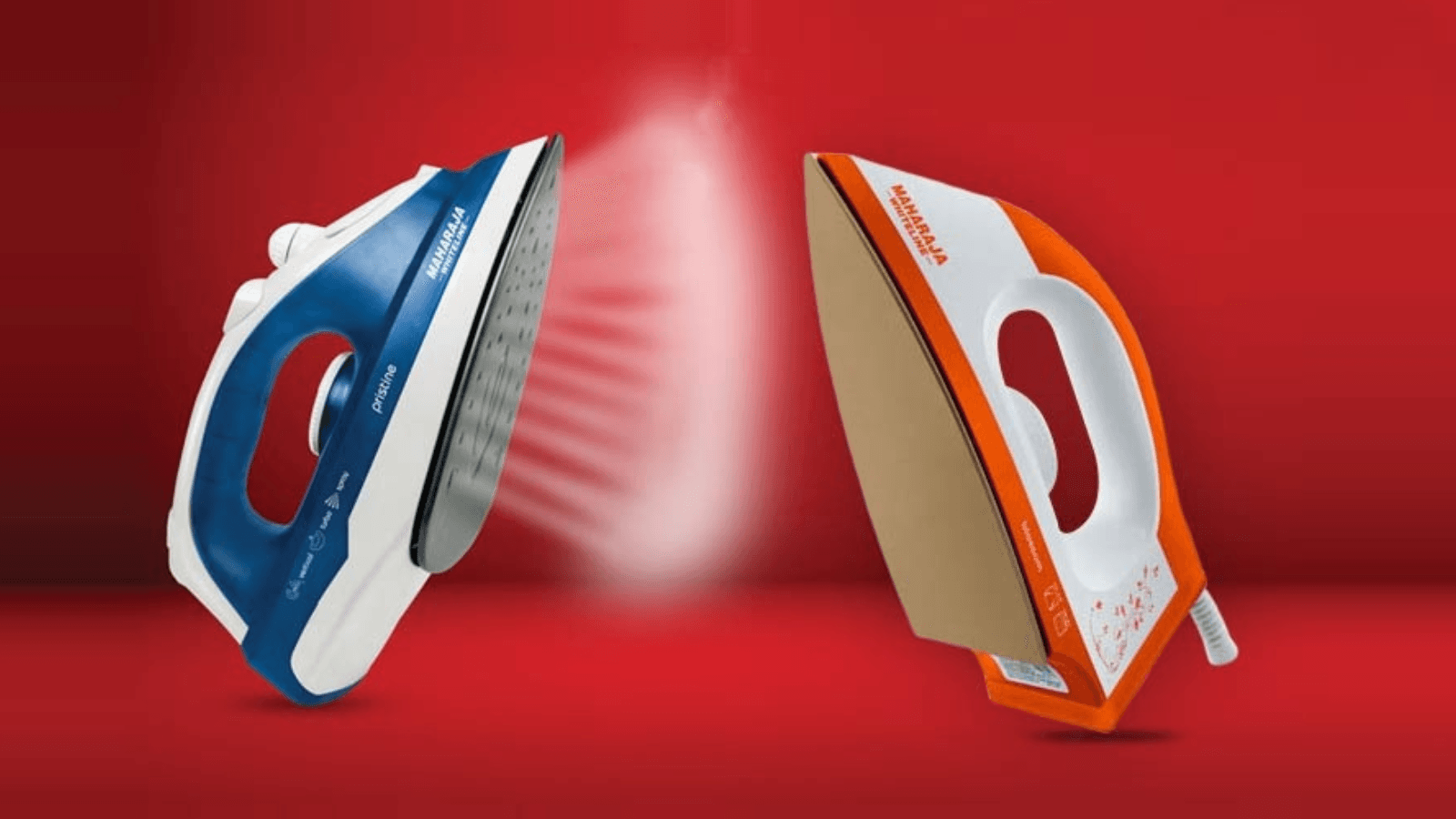
Walking down the appliance aisle or scrolling through online stores, you’ve probably noticed that irons come in two main varieties: steam and dry. The price difference can be significant, and if you’re like most people, you’re wondering whether that steam function is actually worth the extra money or just another feature you’ll never use.
I get it. Ironing isn’t exactly the most exciting household task, but having the right tool makes a real difference in how quickly you can get through a pile of wrinkled clothes. Let’s break down what each type of iron does, who they’re best for, and which one probably makes the most sense for your situation.
What’s the Real Difference?
The distinction between steam and dry irons is pretty straightforward. A dry iron is the simpler of the two. It’s basically a heated metal plate that you press against fabric to smooth out wrinkles. Think of it as the original iron, the kind your grandmother probably used, just with modern temperature controls and safety features.
Steam irons add moisture to the equation. They have a water reservoir built in, and when you turn on the steam function, that water gets heated and released through tiny holes in the soleplate. The combination of heat and moisture penetrates fabric fibers more effectively than heat alone, which is why steam irons have become the default choice for most households.
But here’s the thing: just because steam irons are more popular doesn’t automatically mean they’re better for everyone. Your actual ironing needs matter more than what’s trendy or what gets the most shelf space at the store.
When a Steam Iron Makes Perfect Sense
Steam irons shine when you’re dealing with stubborn wrinkles in natural fabrics like cotton and linen. If you regularly wear button-down shirts, dress pants, or anything made from heavy cotton, a steam iron will make your life considerably easier. The moisture relaxes the fabric fibers, allowing wrinkles to release with less effort and fewer passes.
I’ve found that steam is particularly helpful for items that have been sitting folded or packed for a while. Those deep-set creases that seem almost baked into the fabric? Steam cuts through them much faster than dry heat alone. You’ll spend less time pushing the iron back and forth, which means less arm fatigue and faster results.
Steam irons also work better for vertical steaming. Many models let you hold the iron upright and steam hanging garments, which is great for curtains, delicate items, or that dress shirt you need to touch up quickly before heading out the door. This versatility is genuinely useful if you have limited space or don’t want to haul out the ironing board for every little wrinkle.
The burst steam feature found on many models is another practical advantage. When you encounter a particularly stubborn wrinkle, you can hit a button for an extra shot of steam that tackles the problem area without having to increase the temperature or apply more pressure.
The Practical Downsides of Steam Irons
Steam irons aren’t perfect, and their drawbacks are worth considering before you commit. The most obvious issue is that you need to fill the water reservoir, which adds an extra step to your ironing routine. Running out of water mid-session means stopping to refill, and if your tap water is hard, you’ll eventually deal with mineral buildup that can clog those steam holes.
Maintaining a steam iron requires more attention. You should be using distilled water to prevent mineral deposits, and most manufacturers recommend occasional descaling to keep the steam function working properly. Ignore this maintenance, and you might end up with an iron that spits brown water onto your clean clothes or stops producing steam altogether.
Weight is another consideration. Steam irons are heavier than dry irons because of the water reservoir and additional internal components. If you have wrist issues or find yourself ironing large batches of laundry, that extra weight can become tiring. The difference might only be a pound or so, but you’re lifting and moving the iron constantly while you work.
Steam irons also cost more, both upfront and potentially in energy usage since they’re heating water in addition to the metal plate. If budget is tight, that price difference might be significant enough to influence your decision.
Why Dry Irons Still Have Their Place
Dry irons have stuck around for good reason. They’re simpler, lighter, and often more affordable, but they’re also legitimately better for certain fabrics and situations. Synthetic materials like polyester, nylon, and acrylic actually iron better without steam. These fabrics can develop water spots or become shiny when exposed to moisture, so dry heat gives you better results.
If most of your wardrobe consists of synthetic blends, workout clothes, or delicate fabrics, a dry iron might be all you need. You’ll avoid the risk of water spotting and get smooth results without the extra complexity.
The simplicity of dry irons is genuinely appealing. There’s no water to fill, no steam vents to clean, and fewer parts that can break down. You plug it in, wait for it to heat up, and start ironing. When you’re done, it cools down and goes back in storage. No fussing with leftover water or worrying about mineral buildup.
Dry irons are also lighter and more maneuverable. If you’re ironing intricate details, working around buttons and seams, or tackling delicate embroidery, that reduced weight and bulk makes precision work easier. The smaller, simpler design means you can get into tight spaces without the iron feeling clunky.
For people who travel frequently, dry irons make practical travel companions. They take up less space, weigh less in your luggage, and eliminate concerns about water leaking in your suitcase. Hotel rooms don’t always have distilled water readily available, so a dry iron removes that complication entirely.
What About Your Actual Ironing Habits?
Here’s a question worth asking yourself: how often do you actually iron, and what are you ironing? If you pull out the iron once every few months for a special occasion, investing in a high-end steam iron with multiple settings might be overkill. A basic dry iron or a simple steam model will handle occasional use just fine.
On the other hand, if you’re ironing dress shirts every week for work, dealing with bedding and table linens regularly, or have kids whose school uniforms need constant attention, a quality steam iron will save you time and frustration. The efficiency gains add up quickly when ironing is a regular part of your routine.
Think about your fabric mix too. Look through your closet and drawers. What percentage of your clothes are natural fibers versus synthetics? If you’re seeing mostly cotton, linen, and natural blends, steam makes sense. If polyester and athletic wear dominate, dry might be sufficient.
Consider your living situation as well. Do you have hard water? Are you willing to buy distilled water or deal with descaling procedures? Do you have storage space for a larger, heavier iron? These practical considerations matter more than any feature list.
The Middle Ground Option
Many people don’t realize that most steam irons can function as dry irons. You simply don’t add water or turn on the steam function. This gives you flexibility to use steam when it’s helpful and dry heat when it’s not. If you’re torn between the two types, a steam iron with good dry performance might be your best bet.
That said, not all steam irons work equally well without steam engaged. Some are designed with the assumption that you’ll always use moisture, so their dry performance can be disappointing. If you go this route, look for models that specifically mention effective dry ironing in their features or reviews.
The reverse isn’t true, though. You can’t add steam capability to a dry iron. Once you buy a dry-only model, that’s what you’re stuck with. This is why many people default to steam irons even if they don’t plan to use the steam function frequently. It keeps their options open.
Making the Final Decision
If you’re still unsure which type to choose, here’s a simple framework that works for most people. Choose a steam iron if you regularly iron natural fiber clothing, want the option to steam hanging garments, deal with stubborn wrinkles often, or do a significant amount of ironing each month. The efficiency and effectiveness gains justify the higher price and extra maintenance.
Go with a dry iron if your wardrobe is primarily synthetic, you iron infrequently, you want the simplest possible tool, you’re on a tight budget, or you need something portable for travel. You’ll save money and avoid unnecessary features you won’t use.
For most households with mixed wardrobes and moderate ironing needs, a mid-range steam iron offers the best balance. You don’t need the fanciest model with every possible feature, but having steam available when you need it makes life easier. Look for something with a decent-sized water tank, multiple heat settings, and a reputation for reliability.
A Few Practical Tips Regardless of Your Choice
Whichever type you choose, good ironing technique matters more than expensive equipment. Always start with lower heat settings and work your way up if needed. You can always add more heat, but you can’t undo scorch marks. Check garment care labels and follow the recommendations because that little tag exists for good reason.
Iron clothes while they’re slightly damp when possible. This works with both steam and dry irons and makes wrinkle removal significantly easier. If you’re using a dry iron, a spray bottle with clean water can help with stubborn areas without requiring a full steam function.
Keep your iron clean regardless of type. Wipe down the soleplate regularly to prevent buildup that can transfer to your clothes. For steam irons, empty the water reservoir after each use to prevent mineral deposits and bacteria growth.
Store your iron properly. Let it cool completely, and store it upright if possible. This prevents damage to the soleplate and, for steam irons, helps any remaining water drain properly.
The Bottom Line
There’s no universally correct answer to the steam versus dry iron debate because the right choice depends entirely on your specific situation. The best steam irons offer more versatility and power for tackling tough wrinkles in natural fabrics, while dry irons provide simplicity, affordability, and better results on synthetics.
Most people with varied wardrobes and regular ironing needs will find a steam iron more useful, even if they don’t use the steam function every single time. The option to add moisture when you need it is valuable enough to justify the small increase in price and complexity for the majority of households.
But if you genuinely don’t need steam, maybe because your clothes are mostly synthetic, you iron rarely, or you value simplicity above all else, don’t let anyone convince you that you’re missing out. A good dry iron in the hands of someone who knows how to use it will produce perfectly smooth clothes without any extra features.
Pay attention to your actual needs rather than marketing hype or what everyone else is buying. The best iron for you is the one that matches your wardrobe, your ironing frequency, and your willingness to deal with maintenance. Everything else is just noise.