
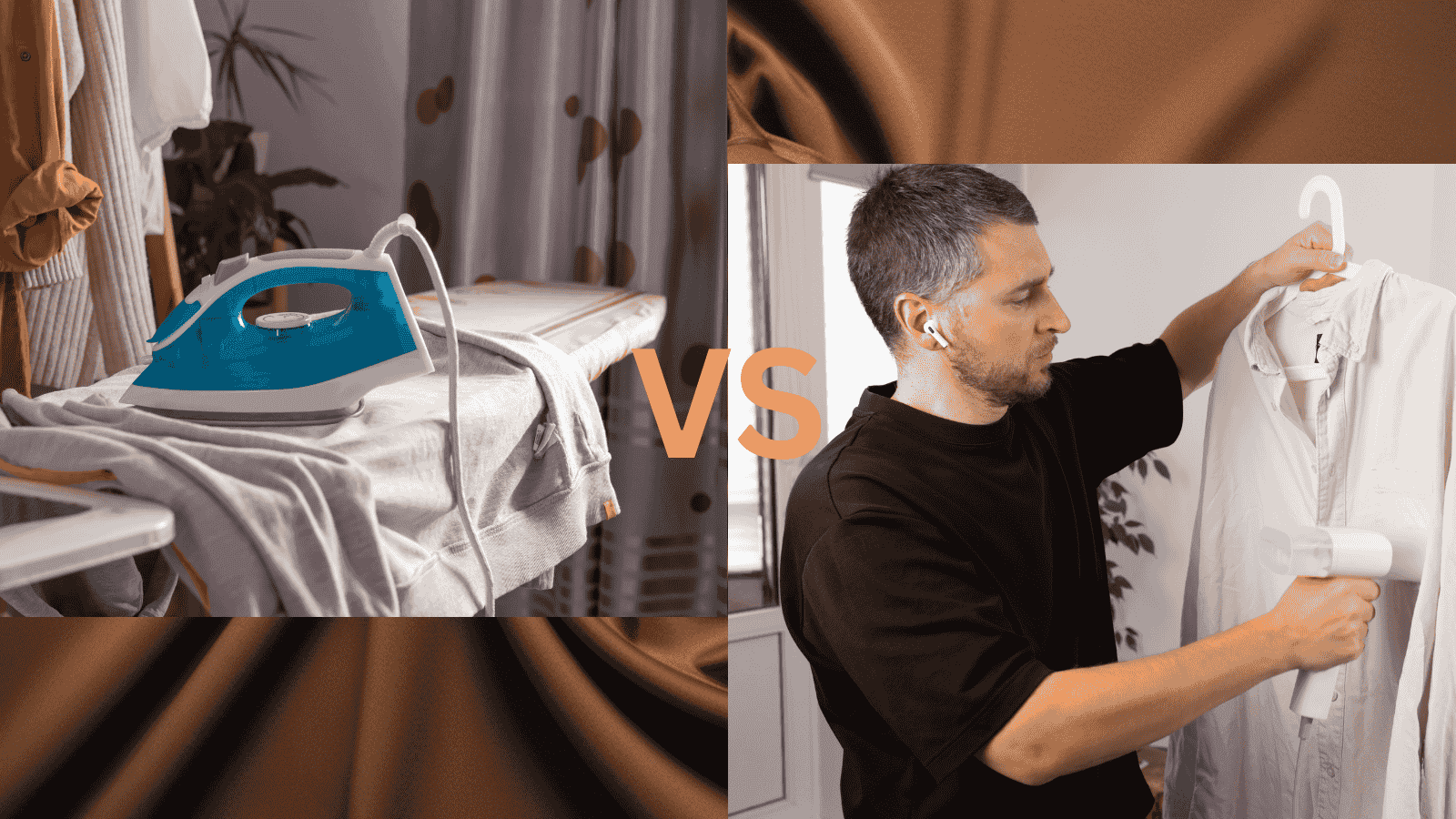
If you’ve ever stood in front of a wrinkled shirt with an important meeting in 30 minutes, you know that getting clothes smooth quickly matters. The question is whether you reach for a steam iron or a garment steamer. Both tools use heat and moisture to remove wrinkles, but they work in fundamentally different ways and excel in different situations.
Understanding which tool to use when can save you time, protect your clothes, and make the whole process less frustrating. Let’s look at how each one works, what they’re genuinely good at, and how to figure out which one belongs in your home.
How Each Tool Actually Works
A steam iron combines a heated metal plate (the soleplate) with steam vents. You press the hot plate directly against fabric while steam releases through small holes, using both heat and pressure to smooth wrinkles. The fabric sits flat on an ironing board, and you work section by section, applying downward pressure as you move the iron across the material.
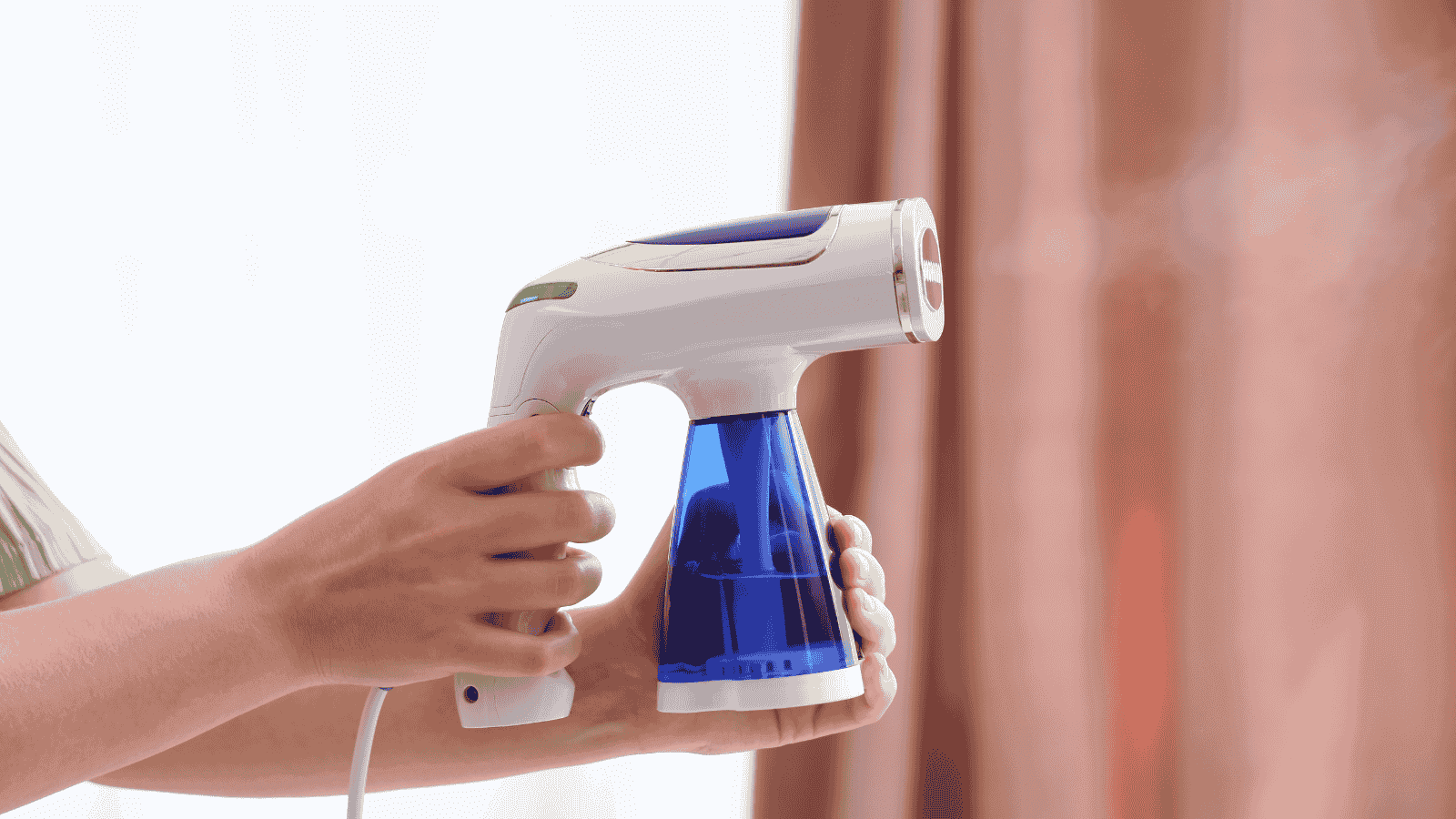
Garment steamers work differently. They heat water to produce continuous steam that flows through a nozzle or head. You hold the steamer upright and run it along hanging garments, allowing the steam to penetrate the fabric and relax the fibers. Gravity helps pull wrinkles out as the fabric hangs, and you never press the steamer directly against the material with force.
This fundamental difference in how they operate explains why each tool has distinct strengths and weaknesses.
What Steam Irons Do Best
Steam irons create crisp, sharp results that steamers simply cannot match. When you need creases in dress pants, sharp collar points, or perfectly smooth shirt fronts, an iron is the only tool that will get you there. The combination of heat, steam, and direct pressure produces results that look professionally pressed.
Heavyweight fabrics respond better to irons. Thick cotton, denim, linen, and canvas need that direct heat and pressure to release deep wrinkles. A steamer might improve these fabrics somewhat, but it won’t give you the smooth, polished finish that an iron provides.
Irons work faster on certain items. If you’re doing a large batch of similar garments like cotton shirts or pillowcases, you can move through them quickly once you get into a rhythm. The direct contact and pressure mean fewer passes over each area compared to steaming.
Detail work is easier with an iron. Getting around buttons, smoothing pocket flaps, pressing seams flat, and working on small areas all become more precise when you can press the iron exactly where you need it. The pointed tip of most irons lets you navigate tight spaces that steamers struggle to reach effectively.
Irons also handle pleats and hems better. Creating or maintaining these structured elements requires the kind of precise, direct heat that only an iron can provide. You can pin pleats in place and press them sharp, or create a crisp hem that stays put.
The Drawbacks of Steam Irons
Ironing takes time and setup. You need to pull out an ironing board, wait for the iron to heat up, and arrange your workspace. For a single garment, this process can feel like more trouble than it’s worth. The ironing board alone takes up space that not everyone has available.
Physical effort is required. You’re lifting the iron repeatedly, applying downward pressure, and standing in one spot for the duration. If you have a large pile of laundry, your arm and shoulder will feel it. People with limited mobility or strength may find prolonged ironing sessions difficult or painful.
There’s a learning curve to ironing well. Getting the temperature right for different fabrics, knowing how much pressure to apply, and developing the technique to avoid creating new wrinkles takes practice. It’s easy to scorch delicate fabrics, create shine on dark materials, or stretch knits out of shape if you’re not careful.
The risk of damage is real. Too much heat burns fabric. Too much pressure on delicate items can crush textures or leave imprints. Keeping the iron in one spot too long creates scorch marks that won’t come out. These mistakes are permanent.
Irons work poorly on certain garments. Anything with embellishments, sequins, beading, or delicate lace becomes difficult or impossible to iron without damaging the decorative elements. Three-dimensional items like jackets with structured shoulders or dresses with complex construction are awkward to manage on a flat ironing board.
Where Garment Steamers Excel
Speed and convenience are the steamer’s biggest advantages. You hang up a garment, turn on the steamer, wait a minute or two for it to heat up, and start steaming. No ironing board, no complicated setup. For touching up one or two items, a steamer is almost always faster than the full iron setup.
Steamers are gentler on fabrics. Because you’re not pressing directly against the material with heat and pressure, there’s minimal risk of scorching, crushing textures, or creating unwanted shine. Delicate fabrics like silk, chiffon, and rayon often look better steamed than ironed.
Hanging garments makes steaming easier for structured items. Suits, jackets, coats, and dresses maintain their shape better when steamed vertically. You can work with the garment’s natural drape instead of fighting against it on a flat surface.
Steamers handle volume well for light wrinkles. If you have a closet full of slightly wrinkled clothes that just need refreshing, you can move through them quickly. Running a steamer over hanging clothes takes less time than setting up to iron each piece individually.
They’re better for travel and small spaces. Handheld steamers are compact and portable. Many people keep them in suitcases for hotel room touch-ups. Even full-size standing steamers typically have smaller footprints than an ironing board and iron combination.
Steamers refresh fabrics beyond just removing wrinkles. The steam can help eliminate odors, reduce static, and make clothes look fresher overall. This is particularly useful for items that you can’t or don’t want to wash frequently, like wool coats or upholstered furniture.
The Limitations of Garment Steamers
Steamers cannot create crisp, pressed looks. If you need sharp creases or that fresh-from-the-dry-cleaner appearance, a steamer won’t deliver. The results are smooth but soft, not crisp and structured.
Heavy wrinkles and thick fabrics challenge steamers. While they’ll make some improvement, deeply wrinkled heavyweight cotton or linen won’t look truly smooth after steaming alone. You might need multiple passes, and even then, the results won’t match what an iron achieves.
Steamers require you to work vertically. This means holding your arms up for the entire steaming session. If you’re doing multiple garments, this becomes tiring. The steamer itself can also get heavy, especially full-size models with water tanks.
Water capacity matters. Handheld steamers have small tanks that run out quickly, requiring frequent refills if you’re steaming several items. Even larger standing models need refilling eventually, and you have to wait for them to reheat after adding cold water.
Steamers can be messy. Hot water sometimes spits out along with steam, especially if you tilt the steamer incorrectly or it hasn’t fully heated. This can leave water spots on fabrics or puddles on your floor.
They don’t work well for all fabrics. Very lightweight, clingy materials may not hang properly for effective steaming. Stiff fabrics that need structure won’t benefit much from steam alone.
Understanding When to Use Each Tool
The nature of the garment should guide your choice. Button-down shirts, dress pants, cotton skirts, and anything that needs to look crisp and professional gets the iron. Blouses, dresses, silk scarves, knit tops, and items with delicate details get the steamer.
Consider the wrinkle severity. Light wrinkling from hanging or wearing responds well to steamers. Deep creases from being packed in a suitcase or folded for weeks require an iron’s pressure and heat.
Think about the occasion. A job interview, wedding, or formal event calls for the polished look that only ironing provides. Everyday wear, casual outfits, or just refreshing clothes that have been hanging in the closet works fine with a steamer.
Your available time matters. If you’re in a rush and just need something to look presentable, a steamer gets you there faster. If you have time and want optimal results, ironing produces better outcomes for most wrinkle-prone fabrics.
Physical factors play a role. If standing and pressing is difficult for you, a steamer might be more manageable. If you find holding your arms up tiring, an iron lets you work with your hands closer to waist level.
Do You Need Both?
Many households benefit from having both tools available. They serve different purposes well enough that having options makes practical sense. An iron handles your crisp dress clothes and heavy cottons, while a steamer takes care of delicate items, quick touch-ups, and garments that are awkward to iron.
If you can only choose one, your wardrobe should decide. Look at what you actually wear most often. If your closet is full of dress shirts, cotton pants, and items that need structure, invest in a good iron. If you wear more knits, delicate fabrics, and casual clothes that just need freshening, a steamer will serve you better.
Budget shoppers can start with whichever tool matches their immediate needs and add the other later if necessary. Basic versions of both tools are affordable, so this isn’t necessarily an expensive decision.
Practical Tips for Better Results
Regardless of which tool you use, working with slightly damp fabric makes wrinkle removal easier. If clothes are completely dry and wrinkles are set in, misting them lightly with water before ironing or steaming helps.
For irons, always check the garment care label and set the appropriate temperature. Starting with lower heat and increasing if needed prevents accidental damage. Use a pressing cloth between the iron and delicate fabrics for extra protection.
For steamers, let the unit fully heat up before starting. This prevents spitting and ensures consistent steam output. Keep the steamer head moving to avoid oversaturating any one area. Work from top to bottom, using your free hand to gently pull the fabric taut.
Both tools work better on clean clothes. Dirt and oils can set into fabric when exposed to heat, making stains permanent. Always launder items before ironing or steaming.
Empty water reservoirs after each use for both irons and steamers. Standing water promotes mineral buildup and bacteria growth. Using distilled water instead of tap water extends the life of your equipment by preventing mineral deposits.
The Maintenance Factor
Steam irons require regular soleplate cleaning to prevent residue buildup that can transfer to clothes. Descaling is necessary if you use tap water. The iron needs to cool completely before storage, and the water reservoir should be emptied.
Garment steamers need similar attention. The water tank should be emptied and allowed to dry between uses. Mineral buildup can clog steam vents, so periodic descaling with white vinegar or a commercial descaling solution keeps them working properly. The hose or nozzle should be checked for blockages.
Both tools last longer with proper care, but steamers generally have fewer components that can fail. Irons have thermostats and steam mechanisms that can wear out, while steamers have simpler heating elements.
What About Combination Tools?
Some products claim to function as both irons and steamers. These typically look like irons but can be held vertically for steaming. They work adequately for light-duty tasks but usually don’t perform either function as well as dedicated tools. A good example is the Hamilton Beach 2-in-1 Iron & Steamer.
If space is extremely limited or you genuinely only need occasional wrinkle removal, a combination tool might suffice. For regular use or demanding tasks, dedicated tools perform better.
Making Your Decision
Think honestly about your actual needs rather than idealized versions of your habits. If you rarely iron now, buying an expensive iron probably won’t change that. If your clothes are usually wrinkled, consider whether the issue is not having the right tool or simply not prioritizing the task.
Consider your living situation. Apartment dwellers with limited storage might prefer a compact steamer. Homeowners with dedicated laundry rooms can accommodate both tools easily.
Your clothing budget matters too. If you invest in quality garments made from natural fibers, proper care with the right tools protects that investment. Fast fashion pieces might not warrant the same level of attention.
The right choice is the one you’ll actually use. A steamer sitting in your closet because ironing seems easier for your needs isn’t helping anyone. An iron you never pull out because the setup feels like too much effort is equally useless.
Both steam irons and garment steamers are useful tools that remove wrinkles effectively. They just do it in different ways that suit different situations. Understanding those differences helps you choose the right tool for each job, whether that means owning both or selecting the one that best matches how you actually live and what you actually wear.