
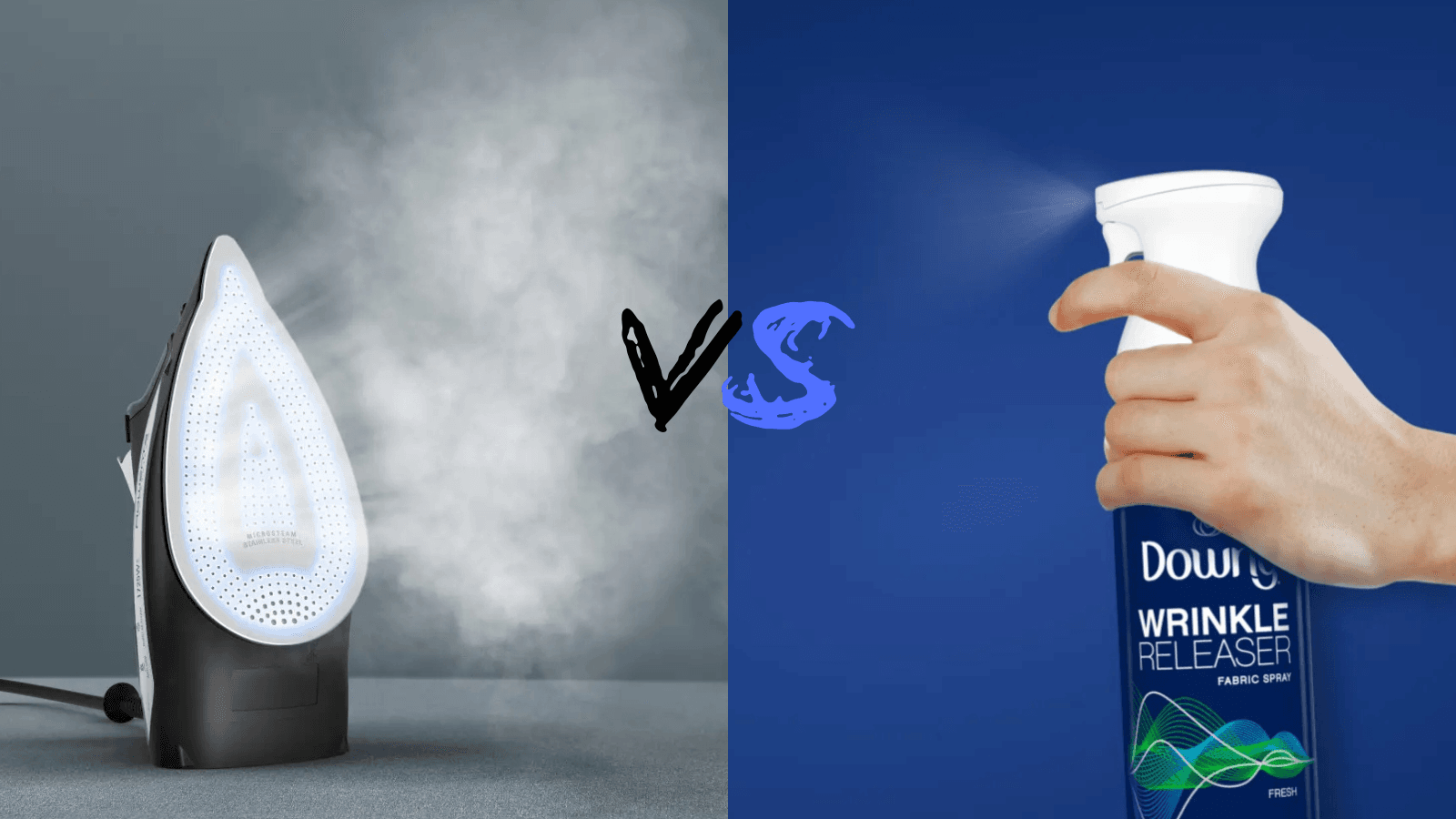
Standing in front of your closet with a wrinkled shirt and limited time, you face a choice: pull out the iron or grab a bottle of wrinkle release spray. Both promise to smooth out fabric, but they work in fundamentally different ways and deliver very different results. Understanding what each method actually does and when it makes sense to use each one can save you time and help you look more put together.
The question isn’t really which is better overall, because that depends entirely on what you’re trying to accomplish and how much effort you’re willing to invest.
How Steam Irons Actually Work
Steam irons use a combination of heat, moisture, and pressure to remove wrinkles from fabric. The heated metal soleplate presses directly against the material while steam penetrates the fibers. This combination relaxes the molecular bonds in the fabric that have been set in wrinkled positions, allowing the fibers to straighten out under heat and pressure.
The process requires setup. You need an ironing board or flat surface, you need to fill the iron’s water reservoir, wait for it to heat up (typically 2 to 3 minutes), and then work through each garment section by section. The iron temperature needs to match the fabric type to avoid damage while still providing effective wrinkle removal.
When done properly, ironing produces crisp, smooth results with sharp creases where you want them and completely flat surfaces where you don’t. The results last until the garment is worn and develops new wrinkles or gets washed again.
How Wrinkle Release Sprays Work
Wrinkle release sprays are liquid solutions that you spray onto wrinkled fabric. The basic formulas typically contain water, a fabric relaxing agent (often a form of alcohol or surfactant), and a fragrance. Some products include additional ingredients like silicones for smoothness or anti-static agents.
When you spray the solution onto fabric, the moisture and relaxing agents penetrate the fibers and temporarily loosen the molecular bonds holding the wrinkles in place. You then smooth the fabric by hand, pulling it taut and allowing it to dry in a smooth position. Gravity helps as the garment hangs, and the slight dampness from the spray lets the fabric reshape itself.
The process is quick. You spray the wrinkled areas, tug and smooth the fabric with your hands, and let it hang for a few minutes while the moisture evaporates. Most products work in 5 to 10 minutes depending on fabric weight and how heavily you sprayed.
Do They Work the Same on All Fabrics?
Light wrinkles on cotton and cotton blends respond reasonably well to wrinkle release sprays. If a shirt has been hanging in the closet and developed some creasing, sprays can improve the appearance noticeably. The fabric won’t look freshly pressed, but it will look acceptable for casual wear or situations where a crisp appearance isn’t critical.
Heavy wrinkles or deep creases in cotton require an iron. Wrinkle release sprays simply don’t have enough muscle to tackle serious wrinkling. A shirt that’s been packed in a suitcase for days or pants that have been folded and compressed won’t respond adequately to spray alone.
Synthetic fabrics like polyester often respond better to wrinkle release sprays than natural fibers do. These materials are less prone to deep wrinkling in the first place, and the lighter wrinkles they develop often release with spray and smoothing. An iron still works better for perfect results, but sprays can get synthetics to an acceptable state more easily than they can with cotton.
Linen presents challenges for both methods. This fabric wrinkles easily and deeply, and those wrinkles resist removal. Wrinkle release sprays make minimal impact on seriously wrinkled linen. Even ironing linen requires patience and often multiple passes. For linen, ironing is really the only effective option if you want truly smooth results.
Silk and delicate fabrics can benefit from wrinkle release sprays because these materials are sensitive to heat and pressure. Sprays offer a gentler approach that reduces the risk of heat damage or unwanted shine that can occur with ironing. However, sprays won’t remove all wrinkles from silk, just improve the overall appearance.
Knit fabrics rarely need either treatment. Knits naturally resist wrinkling, and when they do develop wrinkles, hanging them usually resolves the issue without intervention.
How Much Time Does Each One Really Take?
Wrinkle release spray wins dramatically on time for single items with light wrinkles. Spray a shirt, smooth it with your hands, hang it up, and you’re done in under a minute of active work. Add a few minutes of drying time, and you have a wearable garment in 5 to 10 minutes total with almost no effort.
Ironing requires more time even for a single item. Setting up the ironing board, filling and heating the iron, and pressing the garment properly takes at least 5 to 10 minutes of active work, often longer for items that need careful attention.
However, the time equation changes with multiple items. If you’re doing a batch of laundry, ironing becomes more efficient per item once you’re set up. The setup time gets spread across multiple garments, and you develop a rhythm that speeds the process. Spraying multiple items individually doesn’t really get faster, and you’re still waiting for each to dry.
For serious wrinkles, ironing is actually faster than sprays in terms of total time because it works the first time. Spray might not adequately address heavy wrinkles, leaving you to either spray again, live with mediocre results, or eventually iron anyway.

Which One Gets Your Clothes Looking Better?
An iron produces objectively better results when used correctly. The combination of heat and pressure creates smooth, crisp fabric that looks professionally pressed. You get sharp collar points, flat shirt fronts, creased pants, and completely wrinkle-free surfaces.
Wrinkle release sprays produce improved but not perfect results. Fabric looks better than it did wrinkled, but it doesn’t look pressed. The appearance is more “acceptable” than “polished.” For casual settings, running errands, or everyday wear, this is often perfectly fine. For professional settings, formal occasions, or situations where appearance matters significantly, spray-only results usually fall short.
The lasting power differs too. Properly ironed clothes stay smooth longer because the heat sets the fibers in their straightened position. Wrinkle release spray results are more temporary. The fabric improves but hasn’t been heat-set, so wrinkles can return more quickly, especially if you sit or the fabric gets compressed.
When Does Wrinkle Release Spray Actually Make Sense?
Wrinkle release sprays make the most sense in specific situations. Travel is the obvious one. Carrying a small bottle of spray in your luggage is far more practical than trying to find an iron in a hotel room or hauling a travel iron through security. Spraying clothes fresh out of a suitcase can make them presentable enough for most travel situations.
Quick touch-ups work well with sprays. If you grab something from the dryer that sat too long and developed a few wrinkles, or you need to freshen up a garment that’s been hanging for weeks, spray offers a fast fix without the full ironing setup.
Delicate items that you’re hesitant to iron benefit from the gentler spray approach. Anything that might be damaged by direct heat becomes less risky with spray treatment.
Last-minute situations favor sprays. When you’re running late and discover your only clean shirt is wrinkled, spray gives you a quick improvement that’s better than wearing it severely wrinkled.
Casual wear that doesn’t need to look perfectly pressed works fine with spray treatment. Weekend clothes, loungewear, or anything you’re wearing around the house can be “good enough” with wrinkle release spray.
When Do You Really Need to Pull Out the Iron?
Professional settings require the crisp appearance that only ironing delivers. Job interviews, important meetings, presentations, or any business situation where first impressions matter call for properly pressed clothes. Wrinkle release spray won’t give you that polished, professional look.
Formal events demand ironed clothes. Weddings, fancy dinners, ceremonies, or any occasion where you’re dressing up need the quality results that ironing provides.
Dress shirts and business attire generally need ironing to look right. The structure of these garments and the expectations for how they should look require more than spray can deliver.
Heavy fabrics and serious wrinkles don’t respond adequately to spray. When you’re dealing with substantial wrinkling, ironing is the only method that will actually solve the problem.
Items that need creases or specific shaping require an iron. You cannot create crisp pants creases with wrinkle release spray. Collars that need to lie flat and smooth, plackets that should be perfectly straight, and any detail work needs the precision of ironing.
Cost Considerations
Wrinkle release sprays cost between $5 and $15 per bottle typically. Usage varies based on how heavily you spray and how often you use it, but a bottle might last several weeks to a few months for regular users. The ongoing cost adds up over time, though it remains relatively modest.
Budget steam irons start around $15 to $30. Mid-range models with good performance cost $40 to $100. These are one-time purchases that last years with proper care. The only ongoing costs are electricity (minimal) and distilled water if you choose to use it instead of tap water.
An ironing board adds $30 to $80 to your initial setup cost, but again, this is a one-time purchase that lasts for years.
Over time, owning an iron costs less than regularly buying wrinkle release spray, but the upfront cost is higher and you need storage space for the equipment.
Which One Is Easier on Your Body?
Wrinkle release spray requires minimal physical effort. Spray the bottle, smooth fabric with your hands, done. This makes it accessible for people with limited mobility, arthritis, or other conditions that make ironing difficult or painful.
Ironing demands more physical work. Standing at an ironing board, lifting and moving the iron repeatedly, applying pressure, and working through multiple garments can be tiring. For people with physical limitations, this might not be practical or possible.
The setup required for ironing also creates barriers. Getting out an ironing board, setting it up, and putting it away involves lifting and maneuvering equipment. Wrinkle release spray eliminates these physical demands entirely.
Can You Use Both Without Being Wasteful?
Many people keep both options available and use each for what it does best. This combination approach makes practical sense if you have the budget and storage space.
Use wrinkle release spray for quick fixes, light wrinkles, travel situations, and casual clothes that just need freshening. Use the iron for dress clothes, professional wear, heavy wrinkles, and times when you need clothes to look their absolute best.
This strategy gives you efficiency when time is tight and quality when appearance matters. You’re not trying to make one solution work for every situation.
What People Get Wrong About These Options
Some people believe wrinkle release sprays are just water with fragrance. While water is the primary ingredient, effective products do contain fabric relaxing agents that help release wrinkles. Pure water alone doesn’t work as well, though it does provide some benefit.
Others think wrinkle release spray can completely replace ironing. For some people with modest needs and tolerance for imperfect results, this might be true. For most people, spray is a supplement to ironing, not a replacement.
The belief that ironing damages clothes more than spray is somewhat backwards. Proper ironing at appropriate temperatures doesn’t harm fabric. Improper ironing with too much heat can cause damage, but so can some spray products on certain fabrics if they contain ingredients that leave residue or affect fabric finish.
So Which One Should You Actually Buy?
Your lifestyle should drive this decision. If you wear professional attire regularly, have high standards for how your clothes look, or frequently need to look polished, you need an iron. Wrinkle release spray can supplement it for quick touch-ups, but it cannot replace it.
If you dress casually most of the time, rarely need to look formally put together, or simply don’t care much about having perfectly smooth clothes, wrinkle release spray might handle most of your needs. An iron becomes something you use occasionally rather than regularly.
Your tolerance for imperfection matters. Some people are bothered by clothes that look “mostly smooth but not quite pressed.” Others are perfectly happy with “good enough.” Be honest about which camp you’re in.
Consider your living situation. Small apartments with limited storage might make keeping an iron and board inconvenient enough that you rely more heavily on wrinkle release spray. Homes with dedicated laundry space make iron storage less of an issue.
Think about your physical capabilities. If ironing is painful or exhausting for you, wrinkle release spray might be the better primary solution even if the results aren’t quite as good.
The Honest Answer
Wrinkle release spray doesn’t work better than ironing for removing wrinkles. An iron produces superior results in every objective measure: wrinkles are more completely removed, fabric looks smoother, creases are crisper, and the results last longer.
However, “better” involves more than just effectiveness. Wrinkle release spray is faster, easier, more convenient, requires no setup, demands minimal physical effort, and produces results that are often adequate for everyday purposes.
The right answer for you depends on what you value more: perfect results or convenience. For most people, the ideal solution is having both options available and using each when it makes sense. Use spray for quick fixes and casual needs. Use the iron when appearance truly matters.
If you can only choose one, your wardrobe and lifestyle should decide. Professional workers who wear dress clothes need an iron. Casual dressers who rarely need to look formally polished can get by mostly with wrinkle release spray.
Neither option is universally better. They’re different tools designed for different purposes and different standards. Match the tool to your actual needs rather than trying to force one solution to work for everything.