
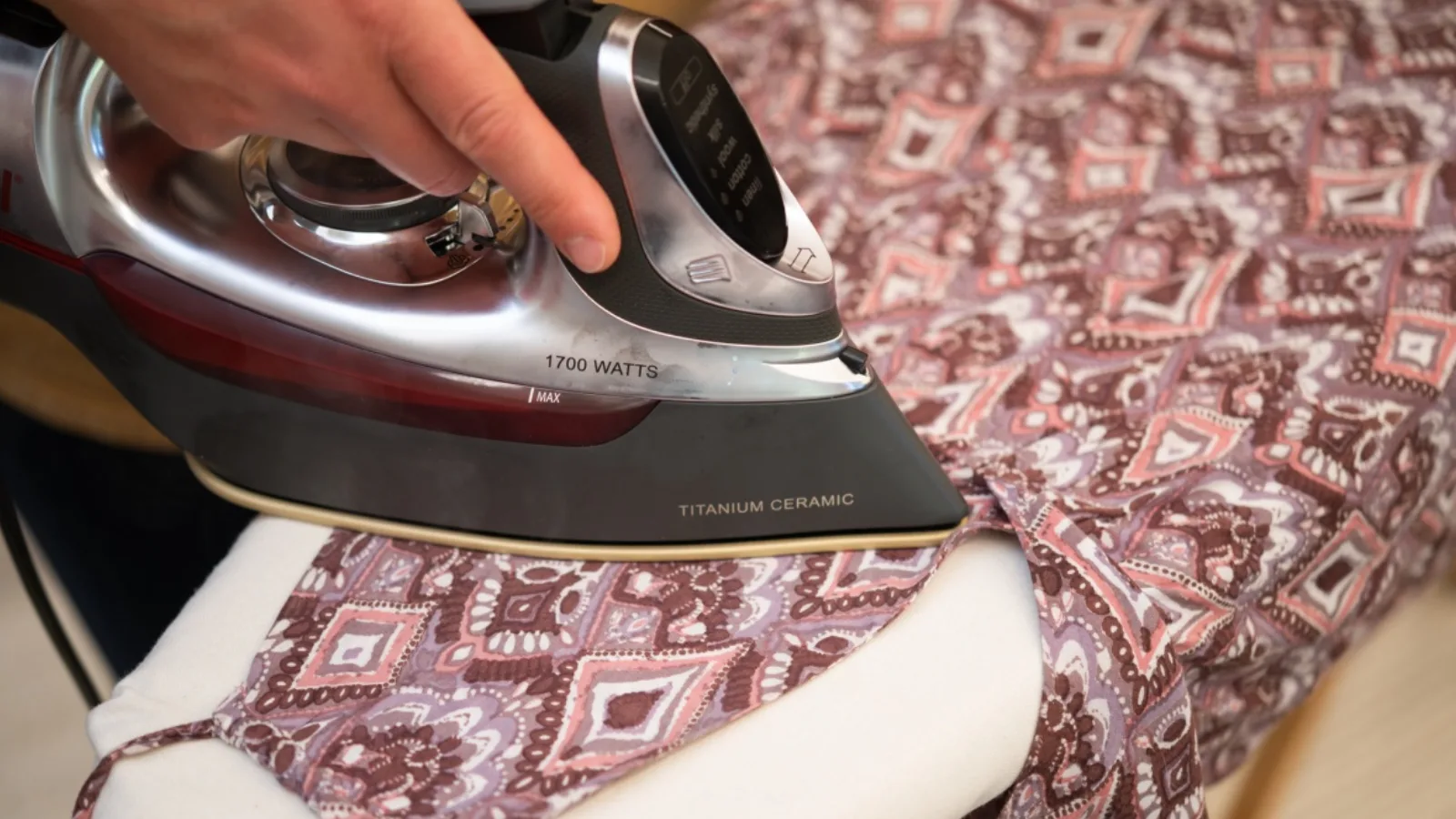
We have all stood there, staring at that small, glowing dial on the iron, wondering what the difference is between the “Synthetic” and “Silk” settings. For many beginners, ironing feels less like a household chore and more like a high-stakes science experiment. One wrong turn of the knob and you could permanently fuse a favorite polyester shirt to the metal soleplate.
The good news is that those symbols and settings are not as mysterious as they seem. They are actually part of a universal language designed to protect your wardrobe. Once you understand the logic behind the dots and the steam icons, you can iron almost anything with total confidence.
In this guide, I will break down every common setting on a modern steam iron, explain the science of fabric temperatures, and give you the foundational knowledge you need to keep your clothes looking crisp without the risk of damage.
The Universal Dot System: Decoding Temperature
Most irons, regardless of the brand, use a universal dot system to indicate heat levels. This system matches the care labels found on the inside of your clothes. If you look at the tag on a garment, you will likely see a small iron icon with one, two, or three dots inside it.
One Dot: Low Heat (Approximately 110°C / 230°F)
This is the “delicate” zone. At this temperature, the iron is warm enough to smooth out light wrinkles but not hot enough to melt plastic-based fibers.
- Fabrics: Acetate, Acrylic, Nylon, and Spandex (Lycra).
- Tip: Always iron these fabrics on the “wrong” side (the inside) to prevent a shiny residue from forming on the surface.
Two Dots: Medium Heat (Approximately 150°C / 300°F)
This is the most common setting for blended fabrics and animal-based fibers. It provides enough heat to relax tougher wrinkles without scorching the material.
- Fabrics: Polyester, Silk, Satin, and Wool.
- Tip: For silk and wool, it is often best to use a “pressing cloth” (a thin piece of cotton fabric) between the iron and the garment to provide an extra layer of protection.
Three Dots: High Heat (Approximately 200°C / 390°F)
This is the power zone. High heat is required to penetrate thick, natural fibers that hold onto wrinkles tightly.
- Fabrics: Cotton, Linen, and Denim.
- Tip: These fabrics often benefit from being slightly damp when you iron them, as the high heat will turn that moisture into steam instantly, flattening even the deepest creases.
Understanding the Steam Settings
Steam is the secret to professional-looking results. While heat relaxes the fibers, moisture and pressure are what actually flatten them. Most modern irons have several ways to deliver that moisture.
Variable Steam Slider
Usually located near the handle, this slider allows you to control how much steam the iron produces continuously.
- Dry Setting: This turns off all steam. Use this for delicate synthetics or when you are using a spray starch.
- Low/Medium Steam: Ideal for light cotton blends or polyester.
- High Steam: Reserved for heavy cottons and linens.
The Shot of Steam (Steam Boost)
This is usually a button located near your thumb or forefinger. When you press it, the iron delivers a concentrated, high-pressure burst of steam. This is your best weapon against stubborn wrinkles in thick fabrics like denim or heavy linen.
Vertical Steam
Many high-end irons can produce steam even when held upright. This essentially turns your iron into a handheld garment steamer. You can use it to refresh curtains or remove light wrinkles from a suit jacket while it is still on the hanger. Just remember to keep the iron a few inches away from the fabric to avoid direct heat contact.
The Spray Mist vs. The Steam Trigger
You will likely see two different buttons on the top of your iron. One produces a “shhh” sound (the steam boost) and the other produces a “spritz” sound (the spray mist).
The Spray Mist Button
This button activates a nozzle at the front of the iron that sprays a fine mist of cool water directly onto the fabric.
- When to use it: Use this for deep, set-in creases that steam alone cannot fix. By dampening the fabric locally, you allow the heat of the iron to work more effectively. It is also great for “dry ironing” cotton shirts when you don’t want to fill the entire steam chamber.
Advanced Maintenance and Safety Settings
Modern irons come equipped with several “hidden” settings designed to keep the appliance running smoothly and your home safe.
Auto-Shutoff: This is perhaps the most important safety feature. Most irons will automatically cut power to the heating element if the device is left stationary for too long. Usually, this happens after about 30 seconds if the iron is flat on the soleplate, or after 8 to 10 minutes if it is standing upright on its heel. If you see a blinking light, the iron has likely entered “sleep mode.” Just move it gently to wake it back up.
Anti-Drip System: Have you ever noticed your iron leaking water when you are using a low heat setting? This happens because the soleplate is not hot enough to turn water into steam. An anti-drip setting is an internal valve that automatically shuts off the water flow when the temperature drops below the steam threshold.
Self-Clean or Anti-Calc: Over time, minerals from tap water can build up inside your iron. A self-clean setting or button allows the iron to flush out these mineral deposits (limescale). We recommend using this once a month to prevent the iron from “spitting” white or brown debris onto your clean clothes.
Quick Tips for Successful Ironing
As you get started, keep these three rules in mind to make the process much smoother:
- Iron in Order: Always start with the fabrics that require the lowest temperature (synthetics) and work your way up to cotton and linen. It is much faster for an iron to heat up than it is for it to cool down. If you iron a cotton shirt and then immediately try to iron a polyester blouse, the residual heat might be high enough to melt the blouse.
- Check the Tag First: If a tag says “Cool Iron,” use the one-dot setting. If it says “Do Not Iron,” believe it! Some modern fabrics are made of heat-sensitive plastics that will shrivel instantly upon contact with metal.
- Use Distilled Water Mix: If you live in an area with hard water, use a 50/50 mix of tap water and distilled water. This prevents mineral buildup and keeps your steam vents clear for a much longer period.
Ironing does not have to be a stressful task. By paying attention to the dot system and understanding how your steam settings work, you can ensure that your clothes always look their best while extending the life of your wardrobe.