
Silk is one of the most luxurious fabrics in any wardrobe, but it is also one of the most intimidating to care for. Many people avoid ironing their silk garments altogether, fearing that one wrong move will result in a permanent burn or a distorted texture. While silk is indeed delicate, it is not impossible to iron. In fact, with the right technique, you can restore that beautiful, liquid-like drape and high-gloss finish that makes silk so special.
The key to success lies in understanding the unique physical properties of silk fibers. Silk is a natural protein fiber, much like human hair. Just as you wouldn’t use a high-heat flat iron on your hair without protection, you cannot treat a silk blouse like a sturdy cotton shirt. This guide will walk you through the essential temperature settings, steam secrets, and protective measures needed to iron silk perfectly every time.
The Science of Silk and Heat
To iron silk safely, you have to respect its “glass transition temperature.” This is the point at which the protein fibers begin to soften and become pliable. For silk, this temperature is relatively low compared to plant-based fibers like linen.
If you exceed this temperature, the fibers can “scorch” or even melt, leading to a brittle texture or a yellowed stain that cannot be removed. Most modern irons have a dedicated “Silk” setting, which usually hovers around 148 degrees Celsius (300 degrees Fahrenheit). If your iron uses a dot system, silk always falls under the two-dot category.
Step 1: Preparation is Everything
You should never iron silk when it is bone dry. Dry silk is brittle and more prone to damage from the heat of the soleplate. The goal is to iron the garment while it is still slightly damp from the wash.
If the garment is already dry, do not use the spray mist function on your iron. Spritzing water directly onto dry silk can cause “water spotting.” These are small, circular marks that occur because the water disturbs the natural dyes or the finish of the fabric. Instead, use a fine mist spray bottle to dampen the entire garment evenly, or hang it in a steamy bathroom for fifteen minutes before you begin.
Step 2: The Inside-Out Rule
This is the golden rule of silk care: always iron on the “wrong” side of the fabric. Silk has a natural luster that comes from the way the fibers reflect light. Direct contact with a hot metal soleplate can flatten these fibers, creating a permanent, artificial-looking “shine” or streak on the surface of the garment. By ironing the inside, you protect the visible side of the fabric from this flattened appearance.
Step 3: Use a Pressing Cloth
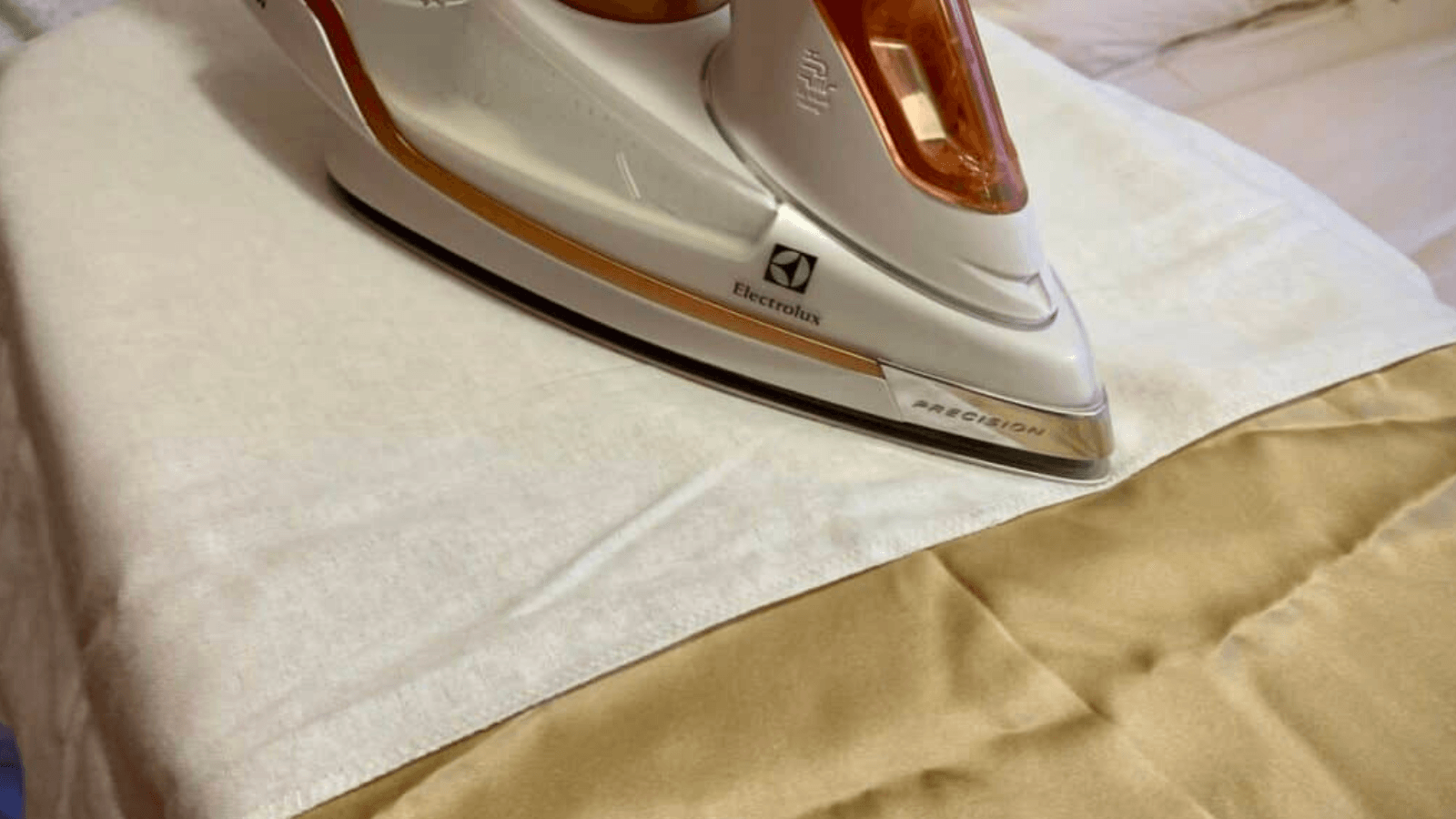
Even when ironing inside out, an extra layer of protection is highly recommended. A pressing cloth acts as a buffer between the iron and the delicate silk.
You do not need to buy anything fancy for this. A clean, white cotton pillowcase or a thin piece of muslin works perfectly. Place the pressing cloth over the silk and iron on top of the cloth. This ensures that the heat is distributed evenly and prevents the iron from making direct contact with the silk fibers, further reducing the risk of scorching.
The Steam Secret: Less is More
While steam is a powerful tool for removing wrinkles in cotton, you must use it sparingly with silk. Too much steam can cause the fabric to stretch or “pucker,” especially along the seams.
When to Use Steam:
If you have a very stubborn crease, you can use a light burst of steam through the pressing cloth. Never hold the iron in one place while steaming; keep it moving constantly.
The “No-Touch” Steaming Method:
For many silk items, you don’t actually need to touch the iron to the fabric at all. Hold the iron an inch or two above the garment and use the “shot of steam” function. Let the steam penetrate the fibers, then gently smooth the fabric with your hand. This is often enough to remove light wrinkles without any risk of heat damage.
The Correct Ironing Motion
When ironing cotton, we tend to use a “scrubbing” motion, pushing the iron back and forth with pressure. This is a mistake with silk. Because silk fibers are more elastic when warm and damp, aggressive pushing can misshape the garment.
Instead of sliding the iron, use a “pressing” motion. Lift the iron, press it down gently on the pressing cloth for a few seconds, and lift it again. Move across the fabric in a systematic way. If you do slide the iron, do so very gently and always in the direction of the grain of the fabric.
Special Considerations for Different Silk Types
Not all silk is created equal, and some varieties require more specialized care:
- Silk Charmeuse: This is the classic, shiny silk. It is the most prone to water spotting and “shining.” Be extra careful with the inside-out rule here.
- Silk Crepe (Crepe de Chine): This fabric has a slightly pebbled texture. It tends to shrink significantly when wet but expands back to its original size when ironed. Use a bit more moisture and a gentle stretching motion as you press.
- Raw Silk (Tussah): This is a heartier, more textured silk. It can usually handle a slightly higher temperature, but you should still use a pressing cloth to avoid flattening the natural “slubs” in the weave.
Aftercare: Cool Before You Wear
Once you have finished ironing, do not put the garment on immediately. Warm silk is still pliable. If you sit down or move around in a warm silk shirt, you will create new wrinkles instantly. Hang the garment on a padded hanger and let it cool completely for at least ten minutes. This “sets” the fibers in their smooth, flat state.
Checklist and Final Thoughts
- Check the label: Ensure the garment is actually silk and doesn’t have “Dry Clean Only” instructions that forbid ironing.
- Dampen evenly: Use a fine mist, never the iron’s spray nozzle.
- Set the dial: Use the “Silk” or two-dot setting.
- Turn it inside out: Always iron the back of the fabric.
- Use a buffer: Place a cotton cloth between the iron and the silk.
- Keep it moving: Never let the iron sit in one spot.
- Cool it down: Hang the item before wearing it.
Ironing silk does not have to be a gamble. Controlling the moisture and using a protective barrier maintains the integrity of the fibers while keeping luxury garments looking brand new for years.
PS: Need a new steam iron? Check out the best steam irons here.