
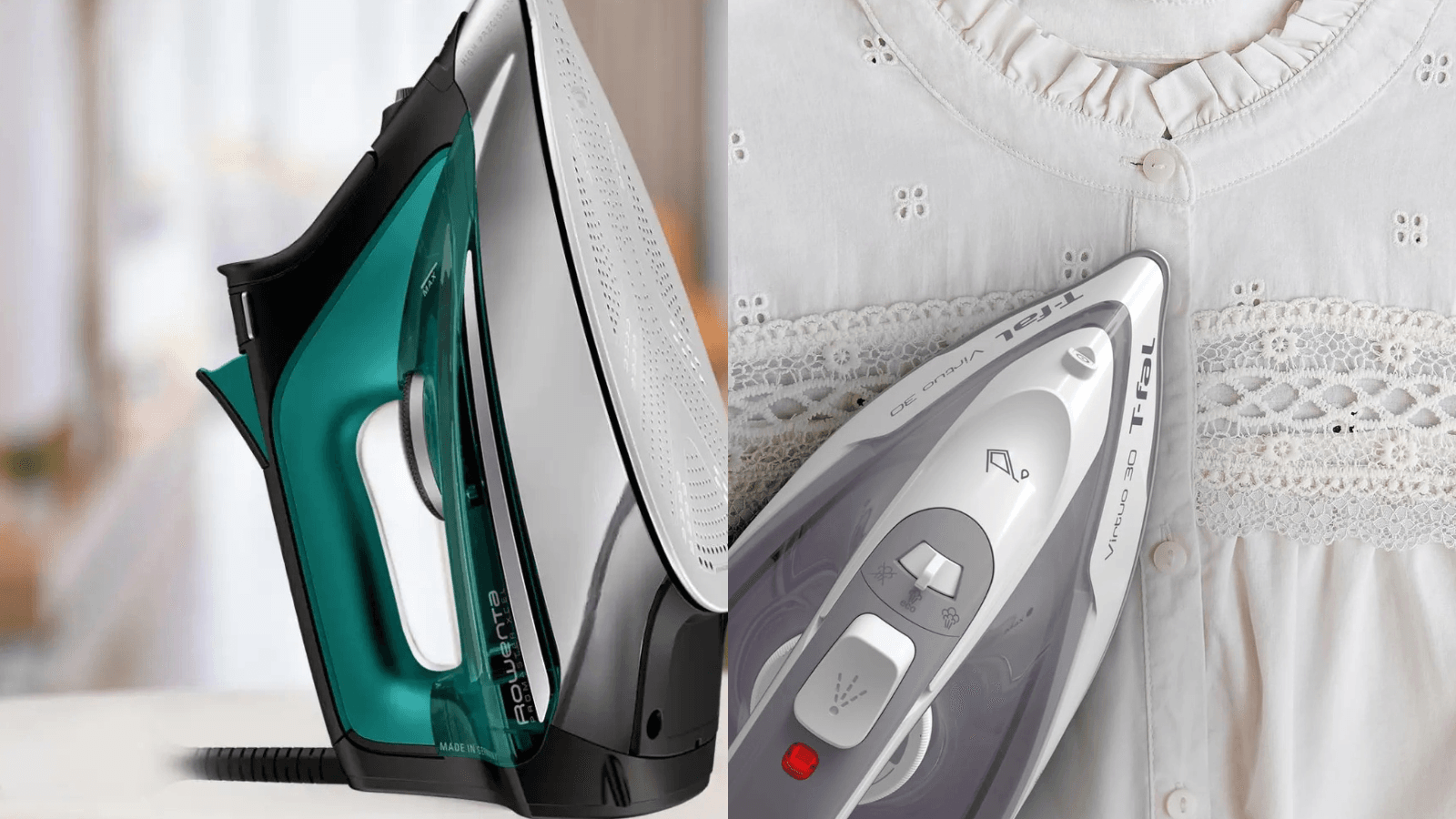
Choosing the best steam iron can make a noticeable difference in how fast, safe, and easy your laundry routine feels. If you are comparing Rowenta and T-Fal steam irons, you are already looking at two of the most trusted names in garment care. Both brands have been around for decades, both are backed by the same global parent company, and both offer models designed for different types of households.
This guide compares Rowenta and T-Fal steam irons based on build quality, steam performance, durability, features, price, and everyday usability. The goal is simple. Help you choose the iron that actually fits your lifestyle, fabrics, and budget without marketing hype or unrealistic promises.
Brand Overview: Rowenta
Rowenta was founded in Germany in 1909 and is now part of Groupe SEB, a large French appliance manufacturer. Rowenta built its reputation around precision engineering and premium garment care tools. Many of its higher-end irons are still manufactured in Germany, although some entry-level models are produced in other regions.
Rowenta irons are widely known for stainless steel soleplates, strong steam output, dense micro steam hole layouts, excellent vertical steaming performance, and solid overall construction. The brand usually targets people who iron frequently or deal with heavier fabrics like denim, linen, and thick cotton.
If you iron several times per week or want something that feels closer to professional quality, Rowenta usually enters the conversation quickly.
Brand Overview: T-Fal
T-Fal is also owned by Groupe SEB and is most famous for nonstick cookware. Over time, the company expanded into garment care appliances, including a wide range of steam irons. T-Fal typically focuses on affordable, practical, and easy-to-use designs for everyday households.
T-Fal irons are known for nonstick soleplates, lighter overall weight, budget-friendly pricing, straightforward controls, and solid performance on common fabrics like cotton blends and synthetics.
Most T-Fal models are built for people who iron occasionally or want reliable performance without paying premium prices.
Build Quality and Materials
Rowenta Build Quality
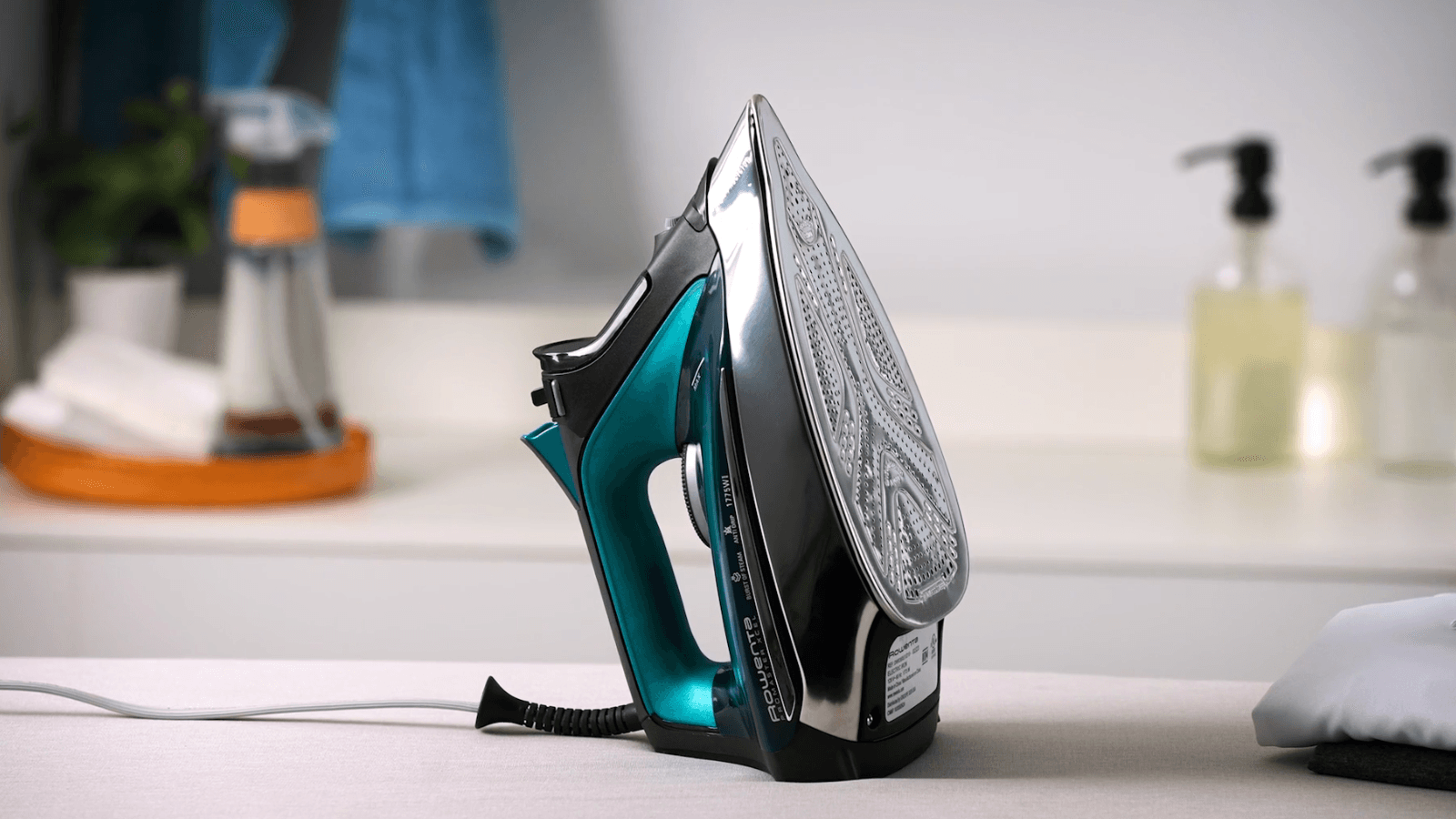
Rowenta irons often use stainless steel soleplates. Stainless steel is valued because it is durable, resistant to scratching, and provides smooth glide across fabric. It also distributes heat evenly, which helps reduce the risk of hot spots that can damage clothing.
Higher-end Rowenta irons usually feel heavier and more solid in your hand. This is intentional. The added weight helps press wrinkles out using the iron’s weight instead of forcing you to push down harder.
Many Rowenta models also use laser-finished soleplates with hundreds of micro steam holes. This allows steam to spread evenly across the fabric instead of concentrating in just a few areas.
T-Fal Build Quality
T-Fal irons typically use ceramic or nonstick-coated soleplates. These surfaces glide easily and work especially well on synthetic fabrics. They are also easier to clean in many cases.
The trade-off is long-term wear. Nonstick coatings can eventually degrade if scratched or cleaned with rough materials.
T-Fal irons are usually lighter than Rowenta models. Many people prefer this for quick ironing sessions or occasional use.
Build Quality Summary:
Rowenta generally leads in long-term durability and premium materials. T-Fal still offers reliable quality but is designed more for everyday household use.
Steam Performance and Power
Rowenta Steam Output
Rowenta is widely recognized for strong steam performance. Many models produce continuous steam between 35 and 55 grams per minute and steam boost bursts between roughly 180 and 250 grams per minute depending on the model.
Higher steam output helps loosen deep wrinkles faster, especially on thick fabrics or layered garments.
Rowenta irons also often feature precision tips with concentrated steam holes near the front. This helps when ironing collars, seams, and tight areas.
T-Fal Steam Output
T-Fal irons usually produce continuous steam between 20 and 40 grams per minute and steam boost output between about 100 and 180 grams per minute.
This is more than enough for everyday clothing like work shirts, T-shirts, and blended fabrics. For heavier fabrics, it may simply require a few extra passes.
Steam Performance Summary:
Rowenta typically delivers stronger steam and faster wrinkle removal. T-Fal delivers dependable performance for normal household clothing.
Heat Performance and Temperature Stability
Rowenta Heat Performance
Rowenta irons are known for consistent temperature regulation. Many models use high wattage heating systems, often around 1700 to 1800 watts in U.S. models.
Stable heat helps prevent fabric scorching and helps steam output remain steady during longer ironing sessions.
T-Fal Heat Performance
T-Fal irons usually operate between about 1400 and 1700 watts depending on the model. Temperature control is generally reliable, although high-end temperature precision is more common in premium irons.
Heat Performance Summary:
Rowenta usually offers more precise heat control, which matters most when ironing delicate fabrics or ironing for longer periods.
Ease of Use and Comfort
Rowenta Ergonomics
Rowenta irons are often heavier, usually between 3 and 4 pounds. For frequent ironing, this can actually reduce effort because the iron presses wrinkles out using its own weight.
Some users who prefer very light appliances may find them slightly tiring during very long ironing sessions.
T-Fal Ergonomics
T-Fal irons are typically lighter and easier to move. Many models include large water tanks and simple dial controls, which makes them beginner friendly.
If you only iron occasionally, a lighter iron often feels more comfortable.
Comfort Summary:
T-Fal often feels easier for casual users. Rowenta often feels better for heavy or frequent ironing.
Durability and Longevity
Rowenta Durability
Many Rowenta users report keeping the same iron for many years when properly maintained. Stainless steel soleplates hold up well and maintain glide quality over time.
Many Rowenta models include advanced anti-scale systems that help reduce mineral buildup in areas with hard water.
T-Fal Durability
T-Fal irons are reliable but are usually not designed for heavy daily use over many years. Nonstick coatings can wear down if not maintained properly.
That said, many T-Fal irons still last several years with normal household use.
Durability Summary:
Rowenta usually has an advantage in long-term durability, especially for frequent users.
Safety Features
Both brands include modern safety features such as auto shutoff, anti-drip systems, self-cleaning functions, and anti-scale protection.
Rowenta sometimes includes more advanced scale collection systems in higher-end models.
T-Fal focuses on simple, dependable safety features that work well for most homes.
Price Comparison
Rowenta Pricing
Rowenta irons usually fall into these ranges:
- Mid range models often cost between $70 and $120
- Premium models often cost between $120 and $200 or more
Rowenta positions itself as a premium garment care brand.
T-Fal Pricing
T-Fal irons usually fall into these ranges:
- Budget models often cost between $30 and $60
- Mid range models often cost between $60 and $90
T-Fal focuses strongly on value and accessibility.
Price Summary:
T-Fal is more affordable. Rowenta costs more but usually offers higher performance and longer lifespan.
Best Use Cases
Choose Rowenta If You
- Iron multiple times per week
- Iron multiple times per week
- Work with thick fabrics
- Want long-term durability
- Prefer stainless steel soleplates
- Want strong vertical steam for hanging clothes
Choose T-Fal If You
- Iron occasionally
- Prefer a lightweight iron
- Need a budget-friendly option
- Mostly iron everyday clothing
- Want simple controls
Real Ownership Considerations
All steam irons require basic maintenance. Using distilled water when recommended and cleaning the iron regularly can extend lifespan.
Hard water mineral buildup is one of the most common reasons irons stop working properly. Both brands include anti-scale systems, but regular cleaning still matters.
Storage also matters. Letting irons cool fully and emptying the water tank before storage helps reduce internal corrosion risk.
Overall Customer Feedback Trends
Across major retailers and appliance review platforms, both brands maintain strong customer ratings. Rowenta usually receives higher scores for steam power, performance, and durability. T-Fal often receives higher scores for value, ease of use, and affordability.
Neither brand has a widespread reputation for major reliability problems when used correctly.
Final Verdict: Rowenta vs. T-Fal Steam Irons
There is no single winner because the right choice depends on how often you iron and what fabrics you work with most.
Rowenta is usually the better choice for frequent ironing, heavier fabrics, and long-term durability. It often feels closer to professional garment care equipment.
T-Fal is usually the better choice for everyday household ironing, lighter use, and shoppers who want dependable performance at a lower price.
If ironing is just a weekly chore and you want something affordable and reliable, T-Fal is often enough.
If ironing is a regular part of your routine, you work with thicker fabrics, or you want an iron that can last for many years with proper care, Rowenta is often worth the higher upfront cost.