
We have all been there. You are in a rush to get ready for a big meeting or a date, you glide your iron across your favorite white shirt, and suddenly, a spray of crusty brown flakes or white spots ruins the fabric. It is frustrating, messy, and usually happens at the worst possible time.
That debris is limescale. If you live in an area with hard water, minerals like calcium and magnesium build up inside your iron over time. This does more than just make a mess; it clogs the steam vents, reduces heat efficiency, and can eventually burn out the internal components of your appliance.
Learning how to descale your iron is the best way to protect your investment and your wardrobe. In this guide, we will break down the specific cleaning steps for the biggest brands on the market and share some professional tips to keep your iron running like new.
By the way, if you’re looking for the best steam irons, you’ll find them in the preceding link.
Why Does My Iron Get Clogged?
When you fill your iron with tap water, you are also introducing tiny amounts of minerals. When the water turns to steam, those minerals stay behind. Over months of use, they solidify into a hard, chalky substance called limescale.
If you notice your iron is “spitting” water, if the steam isn’t as powerful as it used to be, or if you see a chalky residue on the soleplate, it is time for a deep clean.
A Word of Warning: The Vinegar Debate
Before we get into brand-specific instructions, we need to address the most common DIY advice: using vinegar.
While white vinegar is a fantastic natural cleaner for many things, it can be controversial for irons. Some manufacturers, like Rowenta and Philips, explicitly warn against using vinegar because the acid can corrode the internal rubber seals or the protective coating inside the steam chamber.
Always check your specific model’s manual first. If you do choose to use vinegar, always dilute it with at least 50% water and rinse the iron thoroughly afterward.
How to Descale a Philips Steam Iron
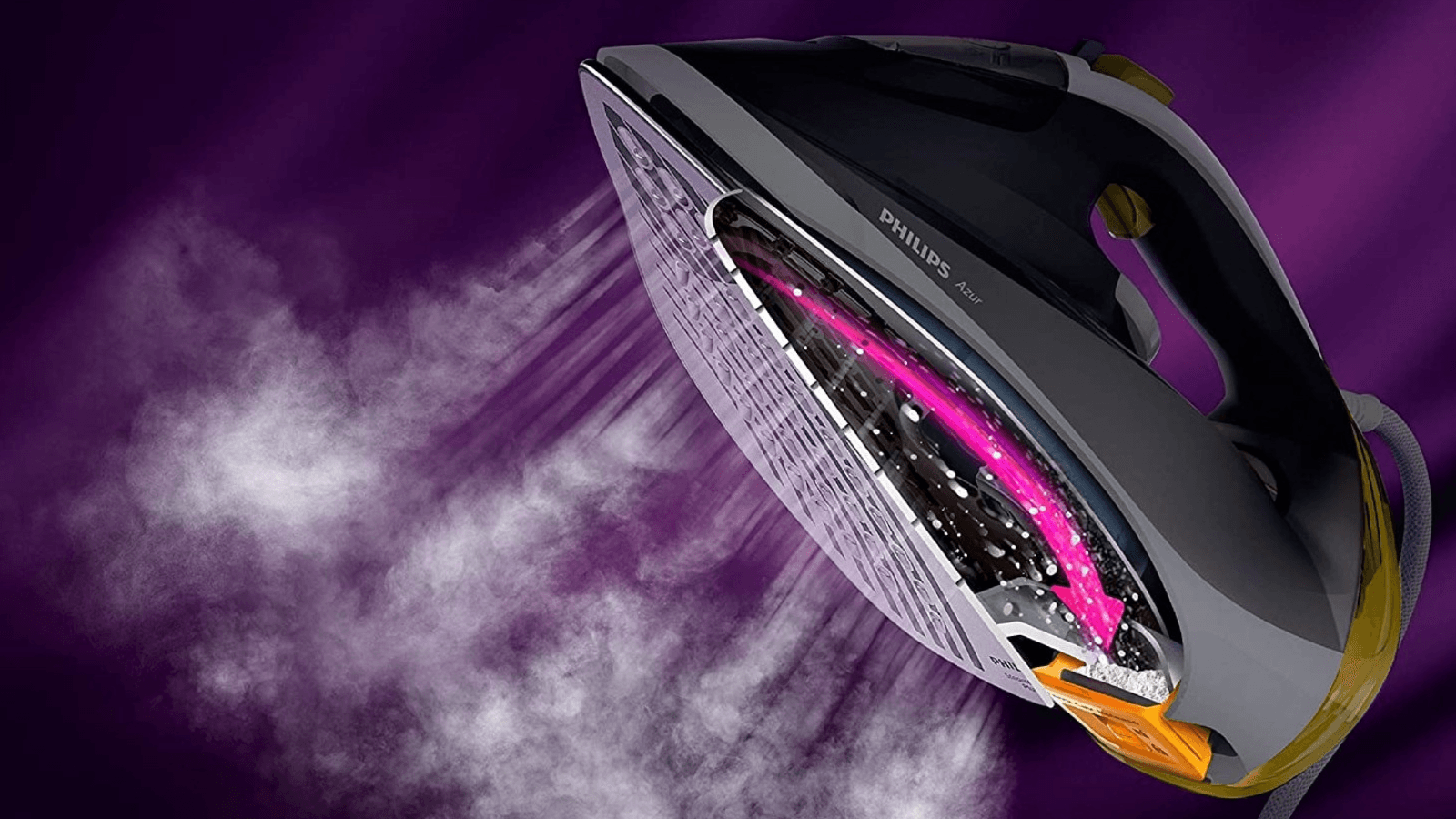
Philips is one of the most popular brands for steam generators and traditional irons. They have made descaling quite easy by building specific “Calc-Clean” features into their designs.
For Irons with a Calc-Clean Button:
- Fill the water tank halfway and turn the iron on.
- Set the temperature to “Max” and turn off the steam setting.
- Once the iron is hot, unplug it and hold it over the sink.
- Press and hold the Calc-Clean button.
- Gently shake the iron back and forth. Boiling water, steam, and scale will flow out of the soleplate vents.
- Once the tank is empty, plug the iron back in and rub the soleplate over a piece of old cloth to clean off any remaining residue.
For Models with a Built-In Calc Container:
Some high-end Philips models have a removable collector. When the “Decalc” light flashes, simply wait for the iron to cool completely, remove the collector at the back or side of the unit, rinse it under the tap, and slide it back in.
How to Descale a Tefal or Rowenta Iron
Tefal and Rowenta are known for their precision engineering, and many of their models feature a “Scale Collector” or an “Anti-Calc” valve.
Using the Anti-Calc Valve:
- If your iron has a removable valve (usually a long stick located where the steam dial is), remove it while the iron is cold.
- Soak the valve in a cup of lemon juice or white vinegar for four hours.
- Rinse the valve under fresh water and put it back in.
- To flush the internal chamber, fill the tank, heat it to max, and then hold the iron over the sink. Set the steam to “Dry” and then back to “Steam” repeatedly to force water through the vents.
The Rowenta “Self-Clean” Method:
Rowenta irons often have a self-clean setting on the temperature dial. Fill the iron with tap water, heat it up, unplug it, and hold it horizontally over the sink. Shift the steam lever to the “Self-Clean” position. The iron will release a massive burst of steam and water to purge the system.
How to Descale a Black+Decker Iron
Black+Decker irons are workhorses, but they still need a little love. Most of their modern models use an “Auto-Clean” system.
- Fill the tank to the “Max” line.
- Plug the iron in and set it to the highest fabric setting (usually Linen).
- Let it sit for about two minutes until the “Ready” light stops blinking.
- Unplug the iron and hold it over a sink with the soleplate facing down.
- Press and hold the Auto-Clean button. Be careful, as very hot water will pour out.
- Continue holding the button until the tank is empty.
How to Descale Sunbeam and Hamilton Beach Irons
These brands often rely on a traditional flushing method. If your iron does not have a dedicated cleaning button, follow these steps:
- Mix a solution of one part white vinegar and one part distilled water (only if the manual allows it).
- Fill the tank about a third of the way.
- Turn the iron to the highest steam setting and let it heat up.
- Iron an old towel for five to ten minutes. The steam will carry the loosened scale out onto the towel.
- Empty the remaining solution.
- Fill the tank with plain water and iron the towel again to ensure all the vinegar smell is gone.
Cleaning the Soleplate: Removing Burnt Residue
Sometimes the problem isn’t inside the iron, but on the bottom. If you have accidentally melted a bit of synthetic fabric or have a buildup of starch, you need to clean the soleplate.
- The Salt Method: Place a piece of paper on your ironing board and sprinkle a tablespoon of coarse salt on it. Run the warm iron over the salt. The grains will act as a gentle abrasive to lift the gunk.
- The Toothpaste Trick: For stubborn marks, apply a small amount of non-gel white toothpaste to a cold soleplate. Scrub gently with a soft cloth, then wipe clean with a damp rag. Make sure to clear out any toothpaste that gets stuck in the steam holes.
- Commercial Cleaners: Products like “Faultless Hot Iron Cleaner” come in a tube. You apply it to a hot iron and wipe it away on an old cloth. This is often the most effective way to handle heavy starch buildup.
Prevention: How to Avoid Limescale in the First Place
You can significantly reduce how often you need to descale by changing your habits.
| Practice | Why it helps |
| Empty the tank after use | Standing water allows minerals to settle and harden. Always pour out the leftover water while the iron is still warm. |
| Use a mix of water | If your tap water is very hard, use a 50/50 mix of tap water and distilled water. Using 100% distilled water is actually not recommended for some modern irons, as it can cause “spitting.” |
| Store it upright | Storing the iron on its heel prevents water from leaking into the steam chamber and dwelling on the soleplate. |
| Keep the temperature right | Using an iron that is too hot for the fabric can cause fibers to melt onto the plate, which eventually clogs the vents. |
Checklist for Descaling
Regardless of the brand, here is the universal “Human-Approved” checklist for a successful clean:
- Safety First: Always unplug the iron before the actual “flushing” process if the manual instructs you to do so.
- Sink Location: Always perform the descaling over a sink or a large basin. The amount of water that comes out can be surprising.
- Vent Clearance: Use a toothpick or a soft toothbrush to gently clear any visible crust from the steam holes before you start the flush.
- Rinse Twice: If you use any cleaning solution or vinegar, always run a full tank of plain water through the iron afterward to prevent lingering smells on your clothes.
A clean iron makes the chore of laundry much faster and more satisfying. By spending ten minutes every few months on maintenance, you will ensure that your iron lasts for years and your clothes stay in pristine condition.