
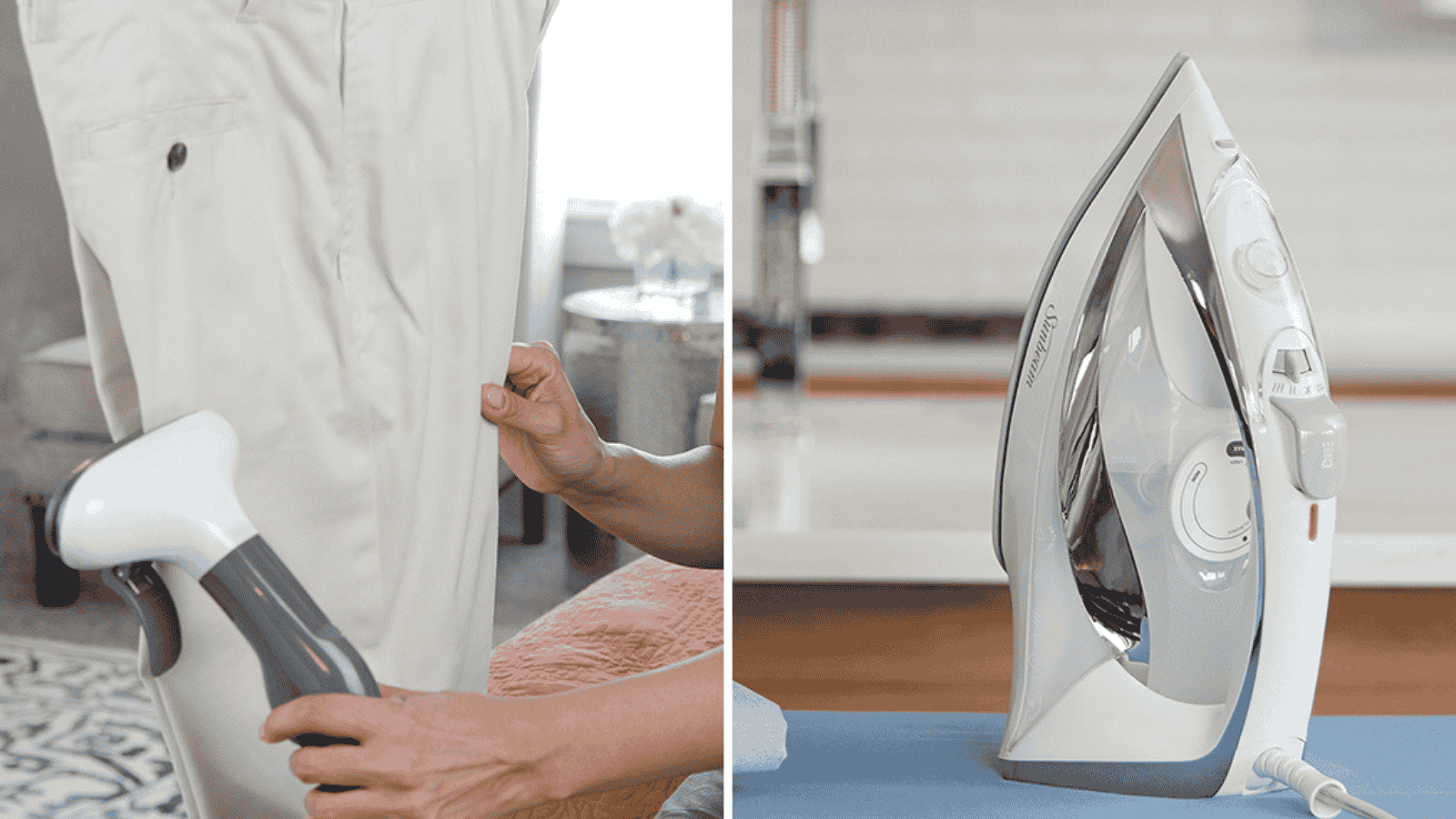
Most people view the morning chore of de-wrinkling as a necessary evil, yet the choice between a heavy metal plate and a cloud of hot vapor is often the difference between a wardrobe that lasts decades and one that ends up in a donation bin prematurely.
It is easy to assume that heat is heat, and as long as the wrinkles disappear, the job is done. However, the reality of garment care is far more nuanced. The tools we use to maintain our clothing are just as important as the detergent we use to wash them.
Understanding the specific mechanics of ironing and steaming is the key to a polished appearance, be you a corporate professional who needs a razor-sharp crease or a creative freelancer who favors flowing silks and linen.
In this guide, I will show you how these two methods differ, which one wins for your specific clothing collection, and how to master both without damaging your appliance.
If after reading this guide you choose to go with an iron, here are the best steam irons to buy.
Why that Heavy Metal plate Actually Works
Ironing is the traditional consumer’s choice, and for good reason. It relies on a combination of three factors: heat, pressure, and moisture. When you press a hot iron onto a fabric, you are performing a controlled “reset” of the material molecular structure. Most natural fibers, like cotton and linen, are held together by hydrogen bonds. When these fibers get wet or crushed in a laundry basket, those bonds break and reform in messy, wrinkled patterns.
The heat of the iron, often supplemented by a burst of steam from the soleplate, breaks those bonds again. The physical weight of the iron then flattens the fibers, and as the fabric cools under that pressure, the bonds reform in a perfectly flat, smooth state. This is why ironing provides a level of “crispness” that no other method can match.
The Big Reasons to Stick With Your Ironing Board
While it might feel old-fashioned, ironing offers several benefits that modern technology has yet to replace. First, there is the matter of unmatched precision. If you need to navigate around buttons, flatten a pocket flap, or sharpen the pleats on a skirt, the pointed tip of an iron is the only tool for the job.
Second, consider structural control. For garments that need to hold a specific shape, such as the collar of a button-down shirt or the hem of a heavy dress, the pressure of an iron sets the fabric in place. Finally, there is the issue of handling tough fabrics. Some materials are simply too stubborn for steam alone. Heavy denim and high-thread-count cotton twill have a physical memory that requires the direct heat and weight of a metal plate to overcome.
What is Really Happening When You Steam a Shirt?
If ironing is a “reset” for your clothes, steaming is a “relaxation.” Instead of forcing fibers into a flat position with weight and heat, a steamer uses hot water vapor to permeate the fabric. This vapor causes the fibers to swell and soften. As the fibers relax, the tension that caused the wrinkle is released, and gravity pulls the fabric back into its natural, smooth drape.
Because a steamer does not usually make direct contact with the fabric, it eliminates many of the risks associated with ironing. There is no risk of “crushing” the texture of a fabric or accidentally melting synthetic fibers with a plate that is too hot.
Why So Many People are Ditching the Board for Steam
For the modern wardrobe, which often includes a mix of natural and synthetic blends, steaming has become the preferred method for several reasons. Speed and ease are at the top of the list. Setting up an ironing board is often the most discouraging part of the process. A steamer requires no board and can be used while the garment is still on the hanger.
There is also the safety factor for delicates. Fabrics like silk, chiffon, and lace are incredibly sensitive to high heat. A steamer allows you to remove wrinkles from several inches away, ensuring the fabric is never in danger of scorching. Beyond looks, high-temperature steam can also kill odor-causing bacteria and dust mites.
This makes it an excellent tool for refreshing garments that have been in storage or pieces like blazers that you do not want to dry clean too frequently.
Which Fabrics Play Nice With Which Tool?
To decide which tool is best for your wardrobe, you must look at the tags on your clothes. Different fibers react differently to heat and moisture.
Cotton and Linen: The tough customers
These are the most durable but also the most prone to deep, stubborn wrinkles. Cotton and linen are composed of cellulose, which loves heat. To get a truly professional look on a 100% cotton shirt, an iron is almost always necessary. While a powerful standing steamer can make these fabrics look passable, it will never achieve that crisp, high-end finish that an iron provides. Linen, in particular, often requires temperatures around 392°F to behave properly.
Silk and Wool: The ones that need a gentle touch
Wool and cashmere are hair-based fibers. If you apply the direct heat of an iron to them, you risk singeing the hair or flattening the natural scales of the fiber, which results in a permanent, unnatural shine. For these materials, steam is the gold standard. It allows the wool to remain lofty and soft. Silk is similarly delicate; the pressure of an iron can easily ruin its natural luster. Always steam your silks to keep them looking luxurious.
Synthetics: The fabrics that melt
Synthetics like polyester, nylon, and acrylic are essentially plastic. They have a very low melting point. If you must iron them, you have to use the lowest possible setting and often a pressing cloth to prevent the iron from sticking to the fabric. Steaming is much safer for synthetics. It provides enough heat to release the wrinkles without ever reaching the melting point of the material.
How to Pick Based on How You Actually Live
Beyond the fabric itself, your daily routine should dictate which tool you invest in. If your daily work uniform consists of structured blazers, pleated trousers, and crisp button-downs, a high-quality steam iron is a non-negotiable. You cannot achieve the necessary level of formality with a steamer alone. However, you might still want a small handheld steamer for quick touch-ups to the elbows or the back of a jacket before a meeting.
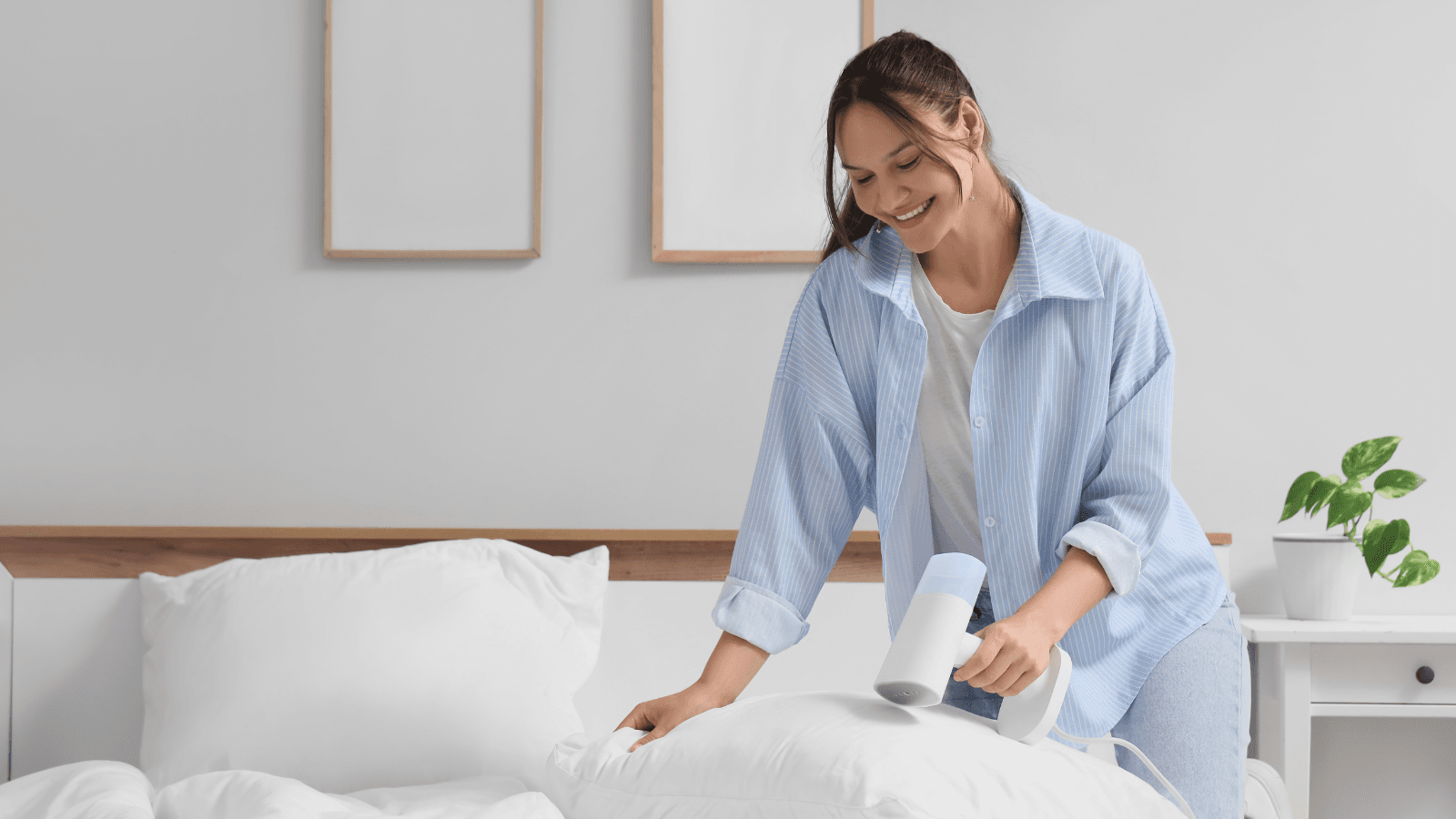
If you mostly wear t-shirts, oversized sweaters, flowy dresses, and synthetic blends, an iron might actually be more of a hindrance than a help. A powerful standing steamer will handle the vast majority of your needs more quickly and with much less risk of damaging your clothes. For those who live out of a suitcase, the choice is clear: the handheld steamer. Hotel irons are notoriously unreliable and often have buildup on the soleplate that can ruin a clean shirt.
Pro Tricks to Get that Store-bought Look at Home
Ironing or steaming, there are techniques that can elevate your results from rushed to professional. When using an iron, always work in the right order. Start with the parts of the garment that can hang off the board without wrinkling, like the collar and cuffs.
Move to the back, then the front panels, and finish with the sleeves. Also, avoid circular motions. Many people iron in a circle, but this can stretch the fabric out of shape. Use long, straight strokes in the direction of the grain of the fabric.
When you are using a steamer, try steaming from the inside out. For thicker fabrics or garments with a lot of detail, placing the steamer head inside the garment and steaming outward allows the vapor to saturate the fibers more deeply. You should also use the taut method, which involves gently pulling the bottom of the garment so the fabric is tight while you run the steamer down the length of it. This provides the tension needed to help those stubborn wrinkles release.
How to Keep Your Gear From Ruining Your Clothes
A tool is only as good as its condition. Neglecting your iron or steamer can lead to ruined clothes and a shorter lifespan for the device.
The biggest enemy is mineral buildup from hard water. Tap water contains minerals like calcium and magnesium that stay behind when water turns to steam. Eventually, these clog the vents or flake off onto your clothes as white or brown spots. Always use a 50/50 mix of tap water and distilled water in both your iron and your steamer (or whatever your manufacturer recommends). If you must use tap water, be sure to use the self-clean function on your iron at least once a month.
If you do use an iron, make sure the soleplate stays clean. If you accidentally melt a bit of synthetic fabric or starch onto your iron, do not try to scrape it off with a knife. This will scratch the plate and cause it to snag future garments. Instead, use a specialized iron cleaning paste or a mixture of vinegar and baking soda on a soft cloth while the iron is completely cool.
Should You Just Get One of Each?
In a perfect world, you would not have to choose. Many garment care experts suggest that the ideal setup is a high-quality steam iron for your anchor pieces and a handheld steamer for everything else. If you need more powerful steam output, consider a steam generator iron.
These devices have a separate water tank and provide much higher steam pressure than a standard steam iron, giving you the best of both worlds: the precision of a metal plate with the wrinkle-blasting power of a professional steamer.
Final Thoughts on a Better-looking Closet
At the end of the day, the goal is to respect the craftsmanship of your clothing. Every time you apply heat to a garment, you are putting it through a minor stress test.
Choosing the method that is most compatible with the fiber and construction of the piece helps you get rid of wrinkles and extend the life of your wardrobe at the same time.